Addressing Water Line Excavation Needs in Upper Arlington
Have you noticed an unexplained, mushy patch of turf near your front walkway, a sudden drop in household water pressure, or the faint sound of rushing water behind your basement wall? A ruptured or heavily corroded main water line is a serious issue that will not stabilize on its own, as pressurized clean water escaping underground washes away supportive subsoil and risks your foundation. DrainMaster provides targeted water line excavation to expose and replace compromised underground service lines efficiently throughout Upper Arlington.
Critical Signs You Need Water Line Excavation
01
Sudden and Unexplained Drop in Whole-Home Water Pressure
You turn on the kitchen faucet or step into the shower and discover the water flow has dwindled to a fraction of its normal volume across every fixture in the house. This widespread drop indicates that pressurized water is escaping through a major fissure or broken joint in the supply pipe before it ever reaches your indoor plumbing. Leaving this unaddressed allows a large volume of treated water to wash into the subsoil, driving up your water bill and undermining nearby ground.
02
Saturated, Spongy Ground or Sinkholes in the Yard
A specific section of your lawn stays constantly wet, muddy, or unusually lush even after periods of dry weather. Escaping municipal water saturates the ground, eventually pooling toward the surface along the path of least resistance. Over time, that continuous flow erodes the surrounding dirt, creating soft depressions or sudden sinkholes that can swallow turf, crack paved walkways, or destabilize retaining walls.
03
Constant Hissing, Rumbling, or Rushing Water Sounds
A persistent humming, hissing, or rushing sound echoes near your basement floor or front foundation wall when every fixture, appliance, and hose bib is completely shut off. That sound is the physical vibration of high-pressure water blasting through a cracked fitting or pipe split just outside your home. Ignoring this acoustic warning can lead to direct foundation seepage, as water pooling against your exterior masonry builds hydrostatic pressure that forces moisture straight through basement walls.
04
Chronic Water Discoloration and Flaking Rust
Cold water flowing from your taps arrives with a distinct brown, yellow, or reddish tint, often leaving gritty metallic sediment in sink basins and tubs. This discoloration happens when the interior walls of an aging underground service pipe oxidize, causing layers of rust to break free into the water stream. Severe internal corrosion thins the pipe wall, signaling that a complete structural collapse may occur.
Root Causes of Underground Water Line Failures
Advanced Age and Galvanized Pipe Corrosion
Continuous use, chemical interactions, and oxygen exposure cause older metal service lines to corrode from the inside out. As rust scales build up inside, water flow becomes choked off until the brittle, thinned pipe wall finally splits open under normal line pressure. Older galvanized iron or early soft copper service runs are especially prone to this type of deterioration.
When a galvanized water service line reaches this stage of deterioration, DrainMaster replaces lead and galvanized water service lines rather than repairing them. Targeted utility excavation allows us to dig down, remove the brittle line, and install a brand-new, corrosion-resistant water service pipe built for long-term reliability.
Ground Shifting and Deep Freeze Lines
The ground can shift between wet and dry periods. That movement exerts shear stress on buried plumbing, placing lateral force on rigid underground pipe joints. Additionally, deep winter frost lines push soil downward against shallow or improperly supported pipes, often snapping brittle lines near curb stops or foundation entry points.
Water line excavation is necessary to clear away the fractured pipe beneath the frost zone, re-establish a stable gravel bed, and lay flexible modern piping that flexes with future ground movement.
Root Intrusion from Trees
Trees naturally extend their root systems toward underground sources of moisture and warmth. As these roots expand, they wrap around underground utility lines, exerting crushing mechanical force or exploiting tiny joint gaps to work their way inside the pipe.
Resolving these deep entanglements requires careful excavation to expose the buried water line beneath complex root zones while limiting disturbance to your landscaping, allowing for the complete removal of damaged pipe and the installation of root-resistant materials.
What to Expect During the Service Visit
1
When our team arrives at your property, we begin by tracing the exact path of your incoming water line. We locate and mark all nearby underground utilities, including gas, electrical, and communications lines, to ensure safety before digging. Our technicians evaluate the depth, soil conditions, and proximity to hardscaping to determine the most direct path to the problem.
2
Before moving any dirt, we explain our physical findings in clear language and walk you through the necessary steps so you know exactly what the job entails. DrainMaster deploys our experienced excavation crew and compact machinery to trench directly to the damaged water line while making every effort to protect your surrounding lawn, gardens, and walkways.
3
After exposing the compromised pipe, we cut away the failed section and install new, heavy-duty copper or high-density polyethylene piping tied securely into the municipal curb stop and your home interior valve. We inspect and pressure-test the entire assembly to confirm no leaks and maximum flow before backfilling. Finally, we backfill the trench in compacted layers to prevent ground settling, leaving your yard clean, orderly, and structurally secure.
Related Services You May Need
If your water service line has multiple leaks or widespread internal decay, scheduling a complete main water line replacement is often the best solution. Replacing the full run at once avoids opening the yard again for each new leak.
Why Water Line Excavation Matters
Pressurized clean water pumping constantly into the ground hollows out the subsoil beneath your lawn, concrete walkways, and driveway slabs. Over time, this underground void leads to sudden sinkholes, cracked concrete, and shifted stone retaining walls that are expensive to rebuild.
Saturated soil packed against a basement wall also creates intense hydrostatic pressure that will eventually exploit hairline masonry cracks, causing severe basement moisture, damaged finished spaces, and mold growth. Addressing the issue helps prevent structural erosion and addresses runaway utility bills.
Reliable Water Line Solutions in Upper Arlington
A ruptured or failing water line is an urgent property issue that demands experienced, heavy-duty excavation care. Our team brings the proper trenching machinery, diagnostic tools, and plumbing expertise to repair underground water leaks safely and effectively. Contact DrainMaster today to schedule an inspection and get your water line excavation completed properly.
Same job, same camera
Before & After
Photographs from DrainMaster jobs, shot before and after the work — not stock photography.
BeforeAfter
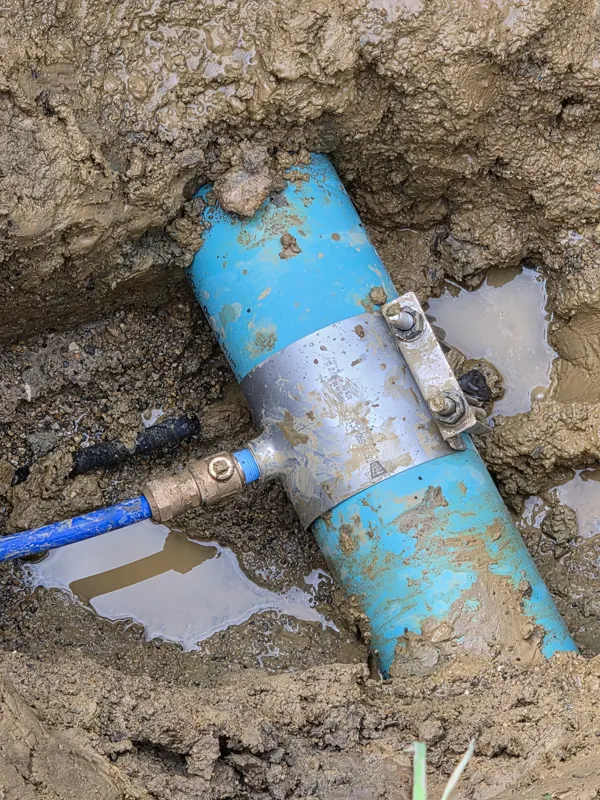
Main water line repair
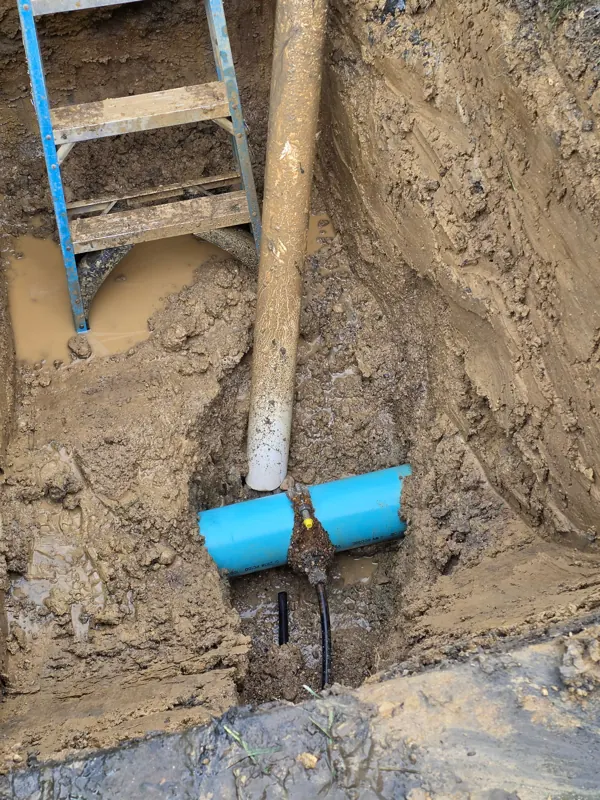
The failed section exposed → New fitting on the repaired service
From our trucks
This Work, On Our Trucks
Photographs from DrainMaster jobs — not stock photography.
Vacuum excavation truck on site
Backfilled and graded after the line went in
The failed section exposed
Exposing the service in a narrow excavation
When your plumbing is a disaster, call the Master
Clogged, Backed Up, or Flooding? Call the Master.
From a stubborn kitchen drain to a collapsed sewer line, the DrainMaster crew has Greater Columbus covered. Phones are answered after hours, and we schedule a licensed local plumber as soon as one is available.
We use cookies. Necessary cookies keep this site working. Optional
analytics, advertising-measurement, and call-tracking cookies help us understand which pages and
ads are useful. You can turn the optional ones off now or any time in
Cookie Settings.