What Happens: Main Water Line Breaks Under the Driveway
Panicking over what happens if my main water line breaks under the driveway? See why destructive trenching isn't the only choice. Explore modern solutions.
Written by
The DrainMaster team
Family-owned Columbus plumbing, drain and sewer company, founded in 1999. Ohio License #35036.
Meet the team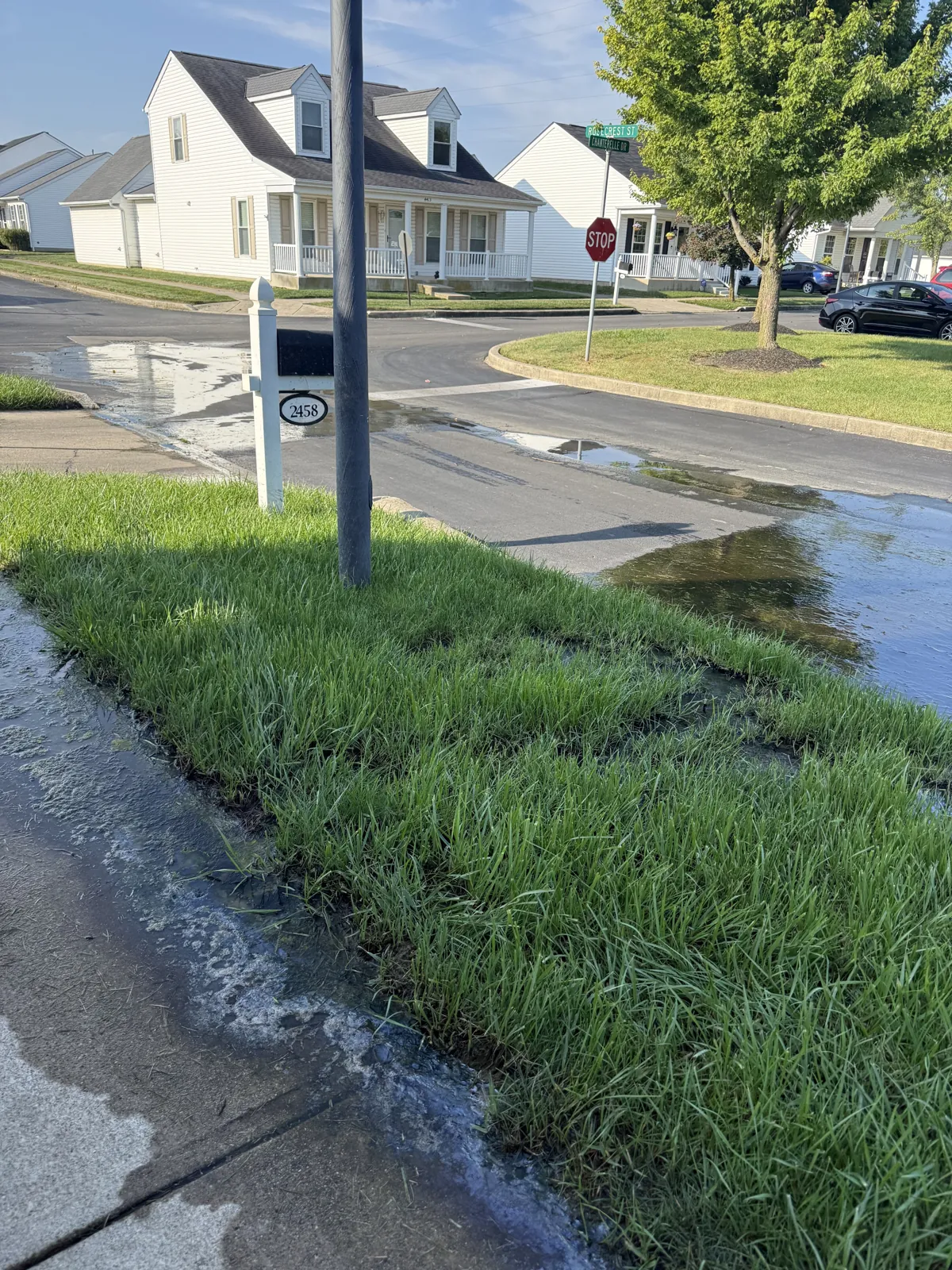
What Happens if My Main Water Line Breaks Under the Driveway?
Are you staring at a mysterious, growing puddle on your concrete and wondering what happens if my main water line breaks under the driveway? The immediate reaction for most homeowners is pure panic. At DrainMaster, our team typically sees a spike in this anxiety during late fall, primarily because people assume fixing a suspected main water line break under a concrete driveway means hiring a crew to jackhammer their expensive concrete right before winter freezes the ground.
If your main water line breaks under your driveway, you may notice water pooling on the concrete, a sudden drop in water pressure, or an unusually high water bill. Fortunately, modern trenchless repair technology allows our plumbers to fix or replace the pipe underground without jackhammering or destroying your driveway.
You do not have to assume that your property must be destroyed to restore your plumbing. When dealing with underground leaks, the decision point comes down to whether you settle for traditional, destructive trenching or seek out modern diagnostic and trenchless repair options. By utilizing our professional Drain and Sewer Services, we can pinpoint the exact location of the failure without moving a single piece of concrete. Especially in places like Columbus OH, where weather changes quickly, knowing your options can save your driveway, your landscaping, and your peace of mind.
Signs You Have a Broken Water Main Under Concrete
Before you panic about a broken pipe, you need to confirm that the symptoms actually point to an underground plumbing failure rather than poor drainage or surface runoff. Because the water main is buried deep beneath a heavy slab of concrete, the signs of a rupture often show up in unexpected ways. If you live in Columbus OH, you might mistake some of these symptoms for normal seasonal ground moisture, but in our years of serving the area, we've learned that a true main line break leaves specific clues.
Here are the most common signs our technicians look for when a main water line is leaking beneath a driveway:
- Unexplained water pooling: You will notice continuous damp spots, mud, or standing water on or right next to the concrete slab, even when it hasn't rained in days. The water is forced upward through the soil and finds the path of least resistance around the edges of the driveway.
- A sudden drop in water pressure: When a significant amount of water escapes through a break in the main line, less volume makes it into your home. You will likely notice this as weak flow in your showers, sinks, and appliances throughout the entire house.
- An unusually high water bill: A hidden underground leak can waste thousands of gallons of water in a surprisingly short amount of time. If your water usage habits haven't changed but your monthly bill has suddenly skyrocketed, a continuous underground leak is a highly probable culprit.
- The faint sound of running water: If you stand near the main water shut-off valve or the area of the driveway where the pipe runs, you might hear a faint hissing or rushing sound, even when all the fixtures inside your home are completely turned off.
To verify these suspicions, you can perform a simple meter test. Turn off all water inside and outside your house, then go look at your water meter. If the leak indicator dial is still spinning, water is actively flowing out of the pipe somewhere between the meter and your home.
Why Do Water Lines Break Under Driveways?
It seems counterintuitive that a pipe protected by a thick layer of concrete would be vulnerable to breaking. However, the driveway itself, combined with the environment around it, actually creates the perfect storm for pipe failure. Understanding why these breaks happen requires looking at the intense physical forces occurring just a few feet below the surface.
The sheer weight of a concrete driveway puts constant, immense pressure on the soil underneath it. When a water line is buried in that soil, it must withstand both the internal pressure of the municipal water supply and the external pressure of the earth and concrete above it. Over time, several factors can compromise the integrity of the pipe.
A pattern we see often in Columbus OH is that the local climate plays a massive role in underground pipe stress. The region experiences significant freeze-thaw cycles. When the ground freezes, the moisture in the soil expands. When it thaws, the soil contracts. Because Columbus has clay-heavy soil, this expansion and contraction is particularly violent. The soil shifting causes ground settlement, which physically moves the earth away from the pipe. Once the pipe loses its supporting bed of soil, the heavy weight of the concrete driveway pushes down on a pipe that is essentially suspended in a void. Eventually, the rigid pipe snaps under the sheer stress.
Age and material degradation also make lines much more susceptible to breaking. Older homes may still have galvanized steel pipes, which rust and corrode from the inside out, weakening the structural walls of the pipe. Other properties might have polybutylene pipes, a material known to become brittle and prone to sudden catastrophic failure when exposed to municipal water chemicals over decades. When you combine aging, brittle materials with the heavy shifting soils of a Columbus winter, our experts know a driveway water line break becomes a highly predictable event.
The Diagnostic Process: Pinpointing the Leak Without Digging
One of the biggest fears homeowners have is that a plumber will show up and immediately start tearing up the concrete just to figure out where the leak is located. In the past, finding an underground leak often involved a lot of destructive guesswork. Today, that is no longer the case. Modern plumbing professionals do not guess where the leak is by destroying your property.
Especially as the November pre-winter freeze approaches, time is of the essence, and you cannot afford to have your driveway disabled by unnecessary excavation. When our DrainMaster team arrives at your home, we utilize modern diagnostic tools that allow for pinpointing the exact location of the issue without any unnecessary destruction. This process relies on advanced technology and specialized training.
- Acoustic Leak Detection: Water escaping from a pipe under high pressure creates a distinct sound frequency. We use highly sensitive acoustic listening devices, which act like electronic stethoscopes for the ground. By sweeping these sensors across the surface of your driveway, our trained technicians can hear the leak through the thick concrete slab and pinpoint the exact spot where the noise is loudest.
- High-Resolution Video Camera Inspections: If the pipe is accessible, we can route a flexible, waterproof fiber-optic camera directly into the water line. This provides a real-time, high-definition visual feed of the interior of the pipe. The camera allows us to see exactly what caused the break—whether it is a separated joint, a severe crack, or a completely collapsed section of pipe.
- Tracer Gas Testing: In cases where acoustic detection is difficult due to background noise or soil density, our team may drain the water line and pressurize it with a safe, non-toxic tracer gas (usually a mix of nitrogen and hydrogen). Because hydrogen molecules are incredibly small, they escape through the leak and rise straight up through the soil and concrete. We then use highly sensitive gas sniffers on the surface to detect exactly where the gas is emerging.
It is vital to understand that diagnosing an underground main line leak is a specialized professional process, not a DIY task. Without this commercial-grade equipment, it is impossible to accurately locate a leak beneath concrete without resorting to destructive digging.
Trenchless Water Line Repair: Saving Your Driveway
Once the leak is accurately located, the next step is repairing it. If you are dreading the thought of heavy machinery destroying your landscaping and concrete, you will be relieved to know about trenchless technology. At DrainMaster, our advanced trenchless repair capabilities serve as the hero solution, and we highly recommend this approach because it completely bypasses the need to destroy expensive concrete driveways in Columbus OH.
Traditional trenching requires digging a continuous, deep ditch from the street all the way to your house. If the pipe runs under the driveway, that means bringing in jackhammers, cutting the concrete, excavating the dirt, replacing the pipe, backfilling the hole, and then pouring new concrete. It is a massive, disruptive, and messy project.
Trenchless repair methods completely change this dynamic. Instead of a continuous trench, trenchless technology typically requires only two small access points—usually one near the municipal connection at the street, and one near the foundation of your house. The driveway in between remains completely untouched.
| Feature | Traditional Trenching | Trenchless Repair |
|---|---|---|
| Excavation Required | Continuous trench along the entire pipe length. | Only 1-2 small access pits at the ends. |
| Driveway Impact | Requires jackhammering and complete replacement. | Zero impact; pipe is replaced underground. |
| Landscaping Impact | Destroys lawns, gardens, and hardscaping. | Preserves existing surface features perfectly. |
| Project Timeline | Multiple days, plus weeks for concrete curing. | Often completed entirely in a single day. |
There are two primary methods of trenchless repair used for water lines. Pipe bursting involves dragging a bursting head through the old, broken pipe. As it moves, it shatters the old pipe outward into the surrounding soil while simultaneously pulling a brand-new, seamless, high-density polyethylene (HDPE) pipe into place behind it. Pipe relining (often called Cured-In-Place Pipe or CIPP) involves pulling a flexible liner coated with a specialized epoxy resin through the existing pipe. Once inflated and cured, it creates a new, structurally sound pipe directly inside the old one. Both methods result in a permanent fix that preserves your landscaping, your hardscaping, and your driveway.

Why Timing Matters: Fixing the Line Before the Deep Freeze
If you suspect a leak under your driveway, ignoring it is the worst possible strategy, especially as the seasons change. In our experience handling Ohio plumbing emergencies, the timing of your repair is absolutely critical. Water lines here are typically buried well below the frost line, which the Ohio Building Code guidelines dictate is between 36 to 42 inches deep. This depth is meant to protect the pipes from freezing temperatures, but it also means that accessing them becomes incredibly difficult once winter sets in.
When the November pre-winter freeze arrives, the ground temperatures begin dropping rapidly. As the soil gets colder, it becomes harder and significantly more difficult to work with. If an excavation is required for an access pit, digging through frozen, solid earth takes much longer and complicates the entire repair process.
More importantly, leaving a leaking pipe unchecked as temperatures plummet invites a much larger disaster. A small leak constantly saturates the soil surrounding the pipe. When that saturated soil inevitably freezes, it expands with tremendous force. This phenomenon, known as frost heave, can easily crush the remaining intact sections of the pipe, turning a minor leak into a major blowout. A total blowout will cut off your home's water supply entirely, leaving you without running water during the coldest, most inconvenient time of the year.
Addressing suspected leaks proactively before winter weather hits is the only way to ensure your home remains safe and functional. The window for easier excavations and straightforward trenchless repairs closes quickly once the November ground temperatures signal the start of the deep freeze.
Frequently Asked Questions About Under-Driveway Water Leaks
When dealing with an underground plumbing emergency, homeowners naturally have a lot of pressing questions about logistics, responsibility, and insurance. If you are wondering about the financial side of these repairs, you might want to know, Is a water main break covered by homeowners insurance? Below, we answer some of the most common questions our team fields regarding under-driveway leaks in Columbus OH.
Can a water main break under a driveway?
Yes, a water main can absolutely break under a driveway. The combination of heavy concrete weight and shifting soil creates immense hydrostatic pressure that can easily cause a rigid pipe to snap or collapse. Furthermore, driveways are often poured directly over the most direct path from the municipal water supply at the street to the home's foundation, making the pipe underneath a prime candidate for stress-related failure.
Does homeowners insurance cover a broken water pipe under a driveway?
Coverage varies significantly by individual policy. Standard homeowners insurance policies often cover the resulting water damage to your home, but they typically do not cover the cost of excavating or repairing the underground pipe itself unless you have purchased a specific service line endorsement. You should always check your specific policy details or contact your insurance agent directly to verify your exact coverage limits for exterior service lines.
Who is responsible for the water line from the street to the house?
In most municipalities, the homeowner is entirely responsible for the private service line running from the property line or the water meter into the house. The city or local utility company is typically only responsible for maintaining and repairing the main municipal water line located out in the public street. If the break occurs on your side of the meter, the repair falls under your responsibility.
How do you fix a broken pipe under a concrete slab?
Our team fixes broken pipes under concrete slabs by using advanced trenchless technology, such as pipe bursting or cured-in-place pipe (CIPP) lining, to repair or replace the pipe entirely underground. These methods require only small access pits at the ends of the line, allowing our technicians to pull a new pipe or structural liner through the old one. This completely avoids the need to break through the concrete slab or destroy the driveway above it.
How long does a trenchless water line repair take?
Most trenchless water line repairs can be completed efficiently in a single day. Because the process eliminates the need for extensive trenching, concrete demolition, and massive soil removal, the actual pipe replacement happens very quickly. This minimizes the disruption to your household's water supply and gets your plumbing system back online before evening.
Schedule Your Water Line Inspection Today
Discovering a suspected leak doesn't automatically mean your driveway is destined for the jackhammer. As we have seen, modern plumbing technology offers solutions that are far less destructive than traditional methods. However, guessing will not solve the problem, and waiting will only allow the escaping water to erode the soil beneath your slab further.
You need a clear, expert explanation of your exact situation and the reassurance that your driveway might be saved. We strongly encourage you to let our DrainMaster experts perform a professional diagnostic evaluation so you know for sure what is happening underground. Do not wait until the November pre-winter freeze turns a manageable leak into a frozen catastrophe. Schedule your comprehensive water line inspection today to pinpoint the issue and explore your trenchless repair options before winter weather complicates the job.
When your plumbing is a disaster, call the Master
Clogged, Backed Up, or Flooding? Call the Master.
From a stubborn kitchen drain to a collapsed sewer line, the DrainMaster crew has Greater Columbus covered. Phones are answered after hours, and we schedule a licensed local plumber as soon as one is available.
- We explain what we find in plain English
- You approve the price before any work starts
- Licensed & insured Ohio plumbers